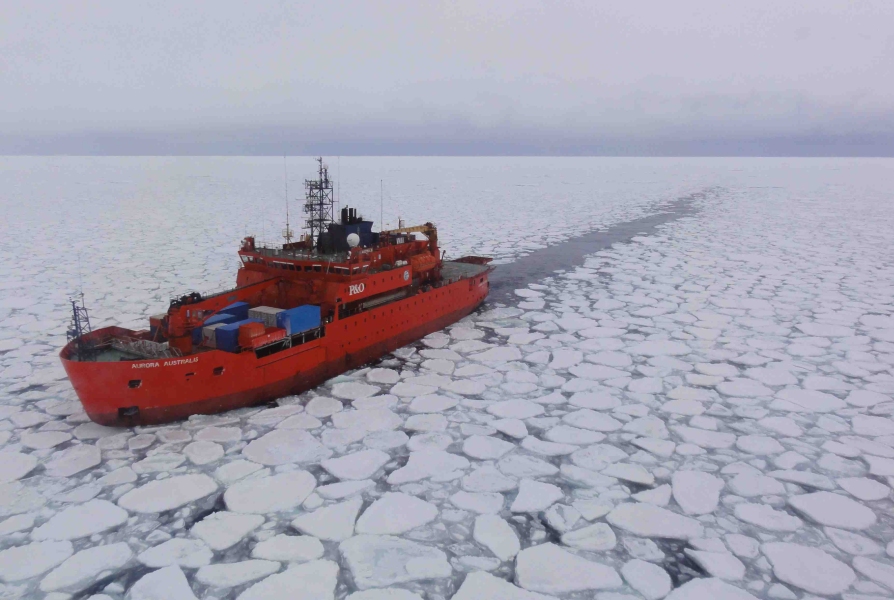
Custom-built drone platforms for heavy lift, waterproof, and Antarctic research operations.
1 - API
Custom API Development
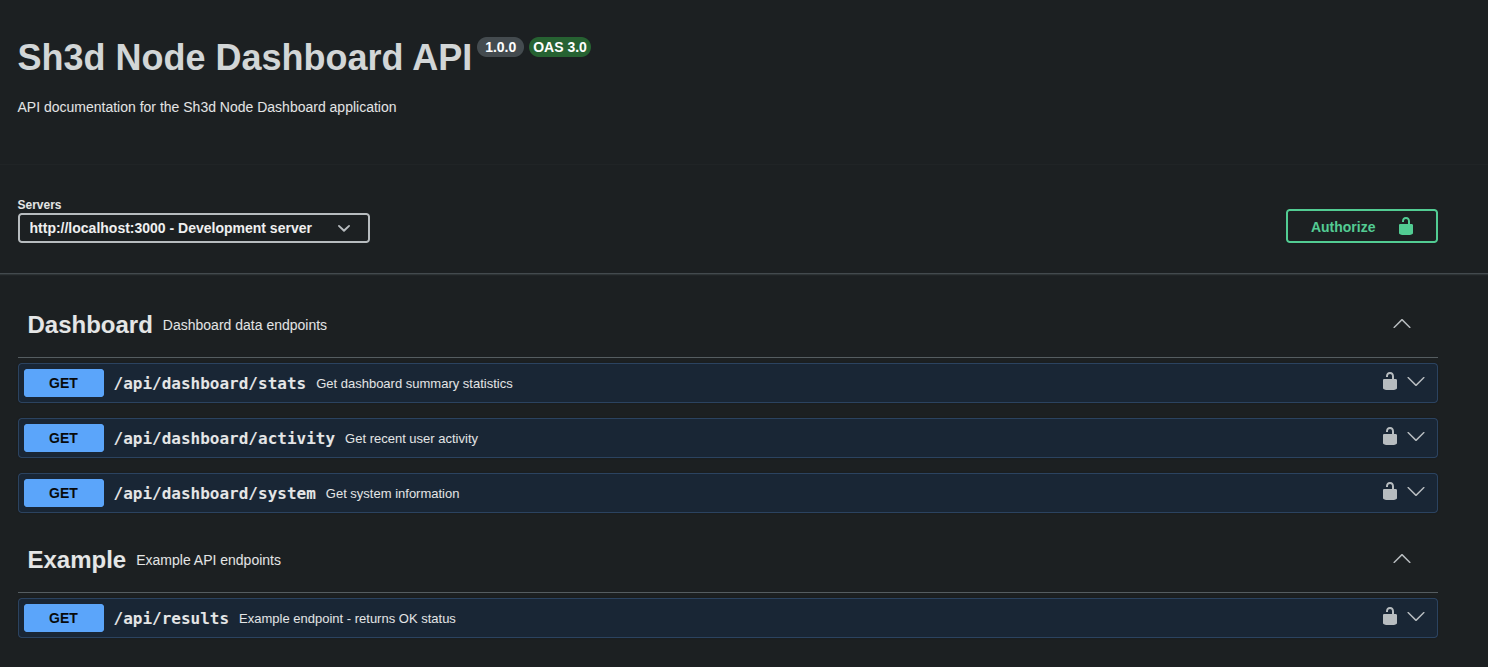
Purpose-built APIs with full documentation, authentication, load control, and testing tools.
What I Build
Features
Full documentation — auto-generated, always up to date
Authentication — token-based, role-based, or custom schemes
Load control — rate limiting, queuing, and graceful degradation
Testing tools — built-in test interfaces for development and QA
Versioning — backward-compatible API evolution
Approach
REST-first design with clear, consistent endpoints
Designed for both internal integration and external consumption
Comprehensive error handling and status codes
Performance-optimised for high-throughput environments
Built to integrate with existing systems and data sources
Documentation & Testing
Built-in API documentation and interactive testing interface
2 - Custom Authentication
Custom Authentication Solutions
Unified identity management across multiple sites with flexible authentication methods, admin dashboards, and database views.
Capabilities
Multi-Site Identity
Single authentication system spanning multiple web properties with unified user management and consistent login experience.
Admin Dashboards
Custom management interfaces for user administration, role assignment, and account oversight — built for the people who actually use them.
Flexible Methods
Support for multiple authentication flows — token-based, session-based, or custom schemes — with role-based access control throughout.
Screenshots
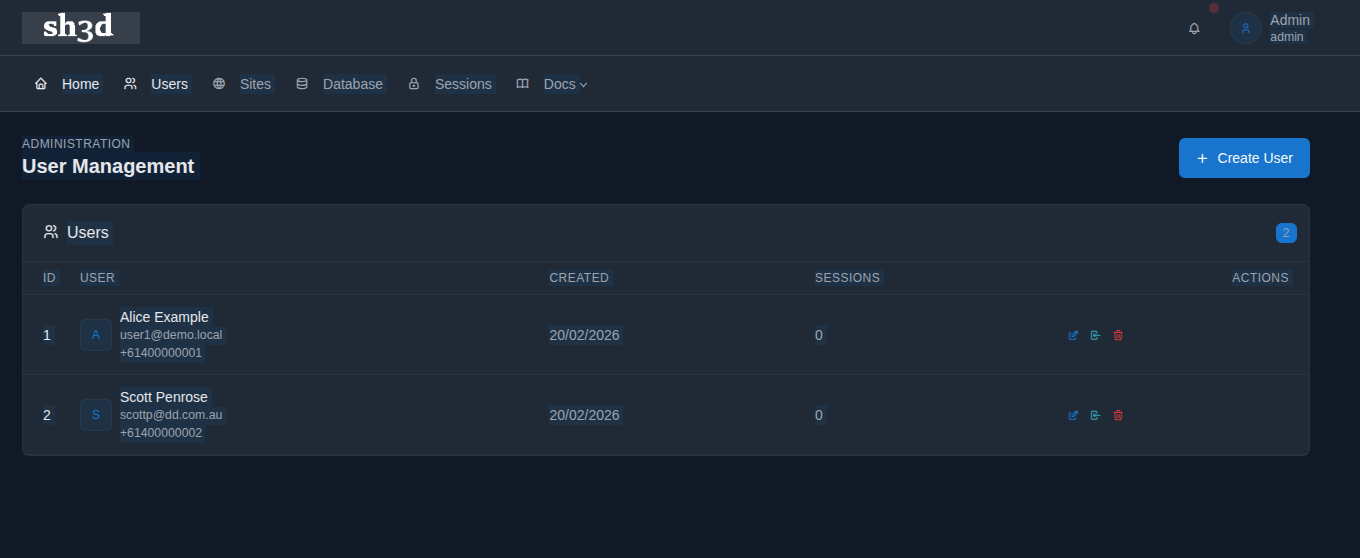
User management — view and edit user details, roles, and permissions
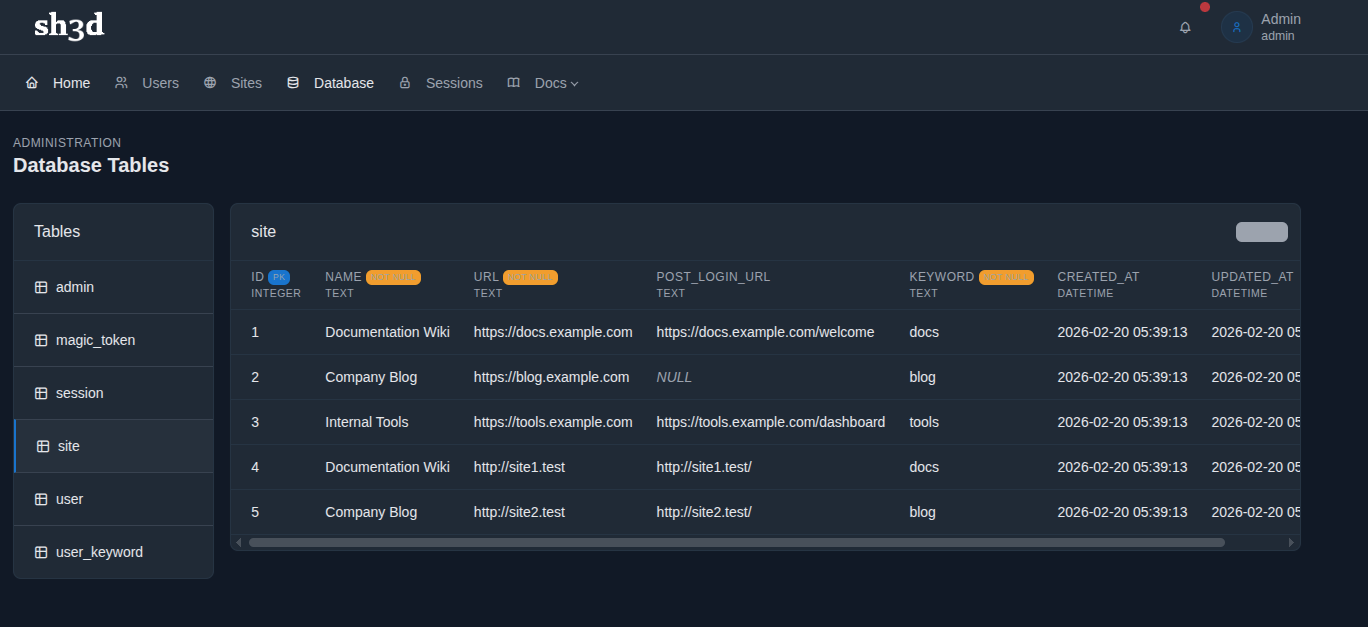
Custom database views and tables for direct data inspection
3 - Custom Displays
Embedded Display Solutions
Purpose-built display systems for solar monitoring, industrial data visualisation, and long-running embedded applications.
Capabilities
Any Size
From tiny status indicators to full OLED and eInk panels — matched to your use case and environment.
Always On
Designed for long-running, unattended operation with automatic logging and ultra-low power consumption.
Interactive
Touch input and scroll navigation on embedded displays — real controls, not just a read-only screen.
Examples
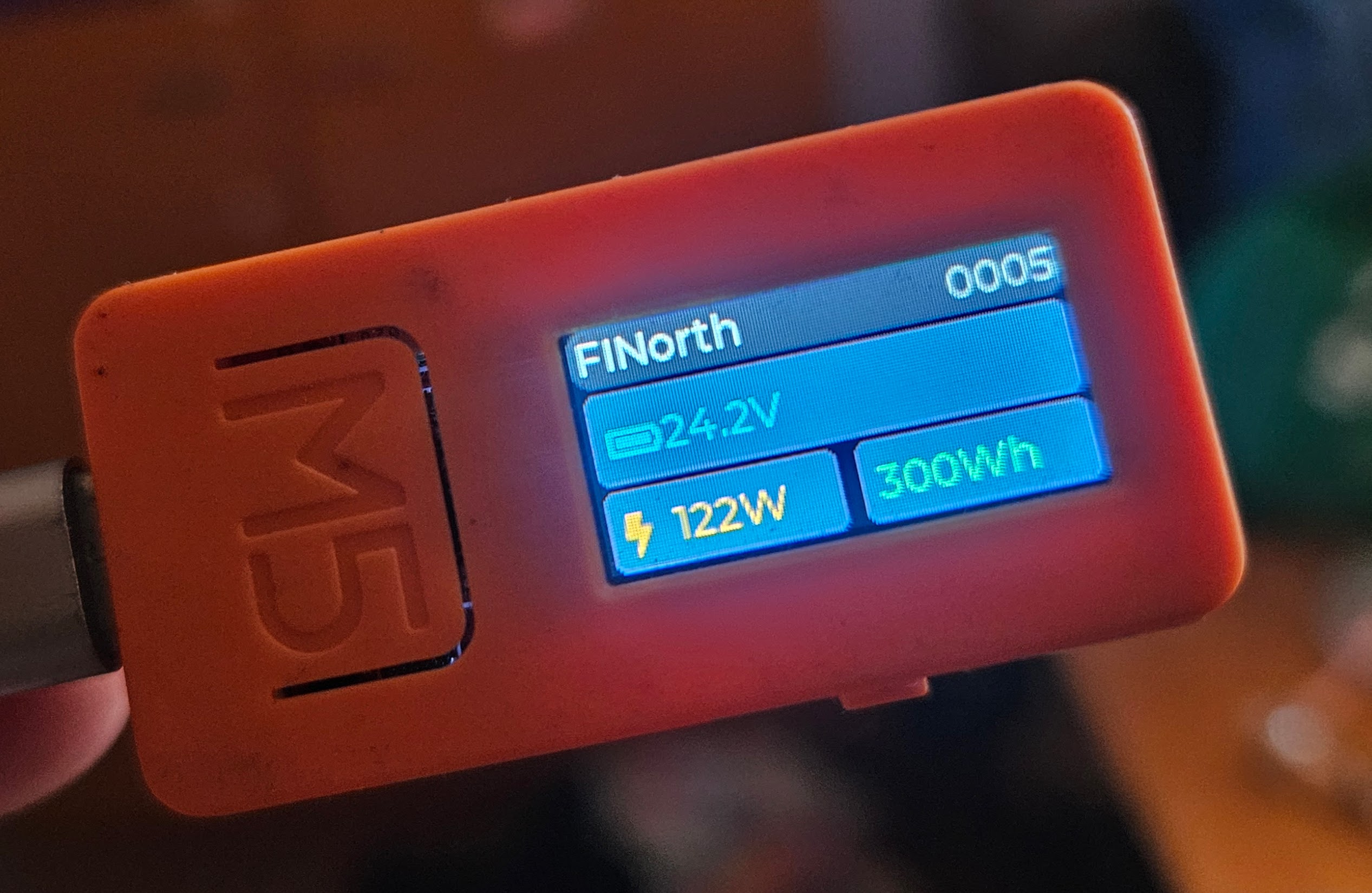
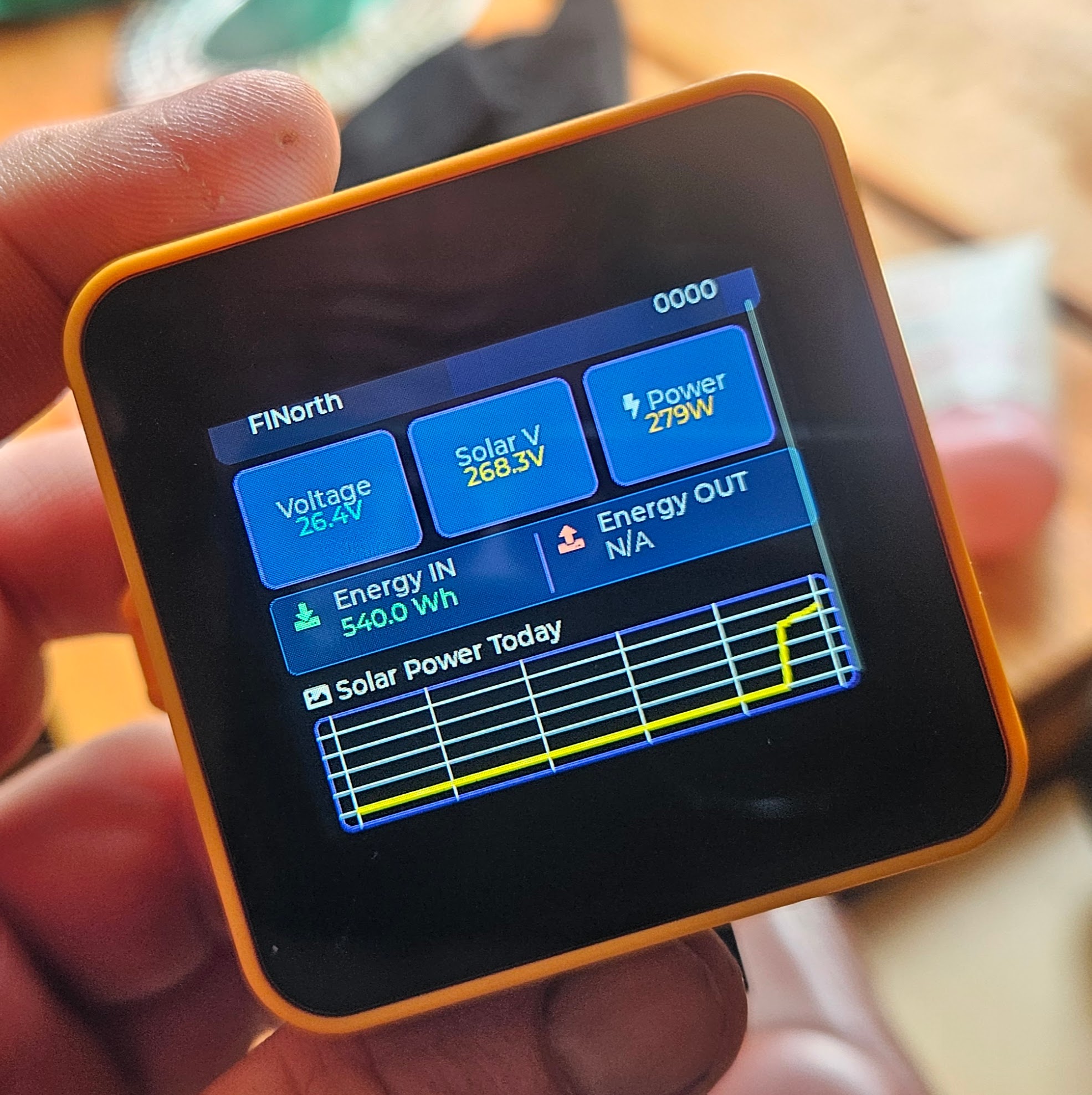
Solar monitoring on a tiny display — compact, low-power, always visible
Solar monitoring on a medium display with touch input and scroll navigation
4 - Dashboards
Custom Dashboards
Real-time monitoring, firmware management, and device configuration — built to run on anything from a Raspberry Pi to a full server.
What Makes These Different
Local data, local control — dashboards connect directly to your hardware and data sources
Any size, any type — from compact embedded displays to full-screen monitoring walls
Long-running reliability — designed for always-on operation with automatic logging
Low power options — OLED and eInk display support for battery-powered deployments
Examples
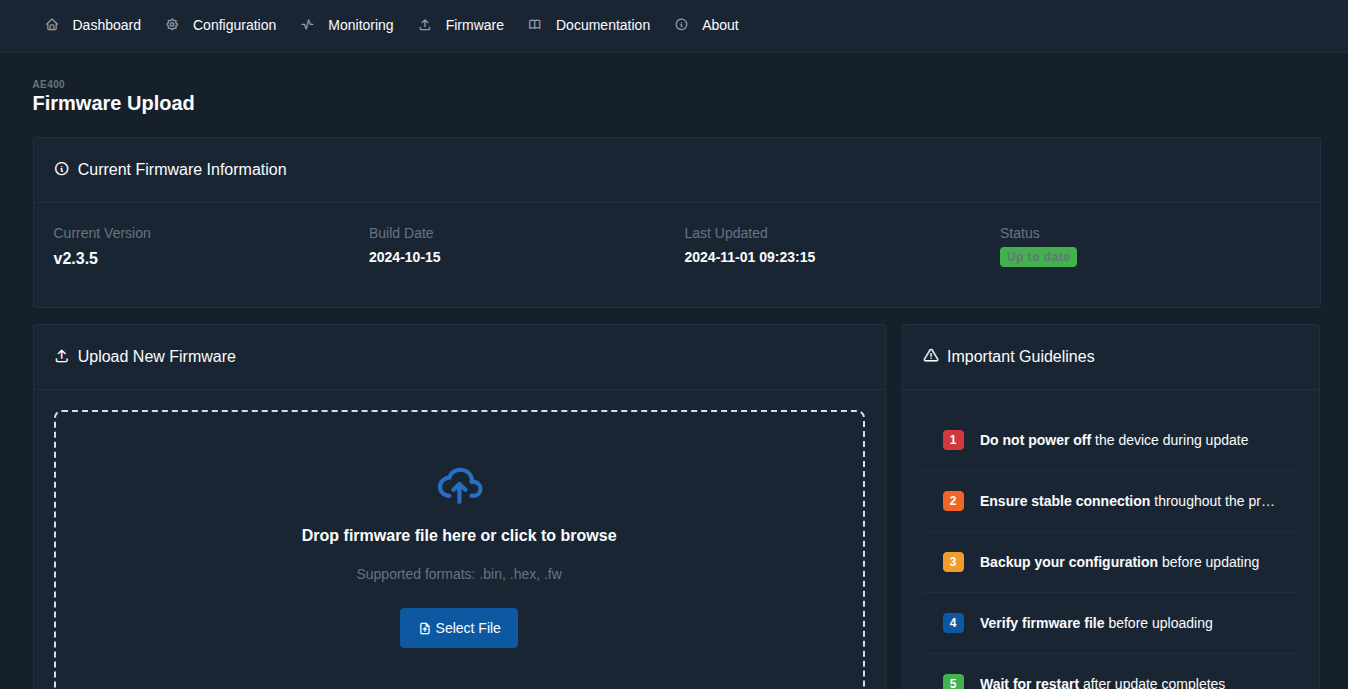
Firmware upload and management
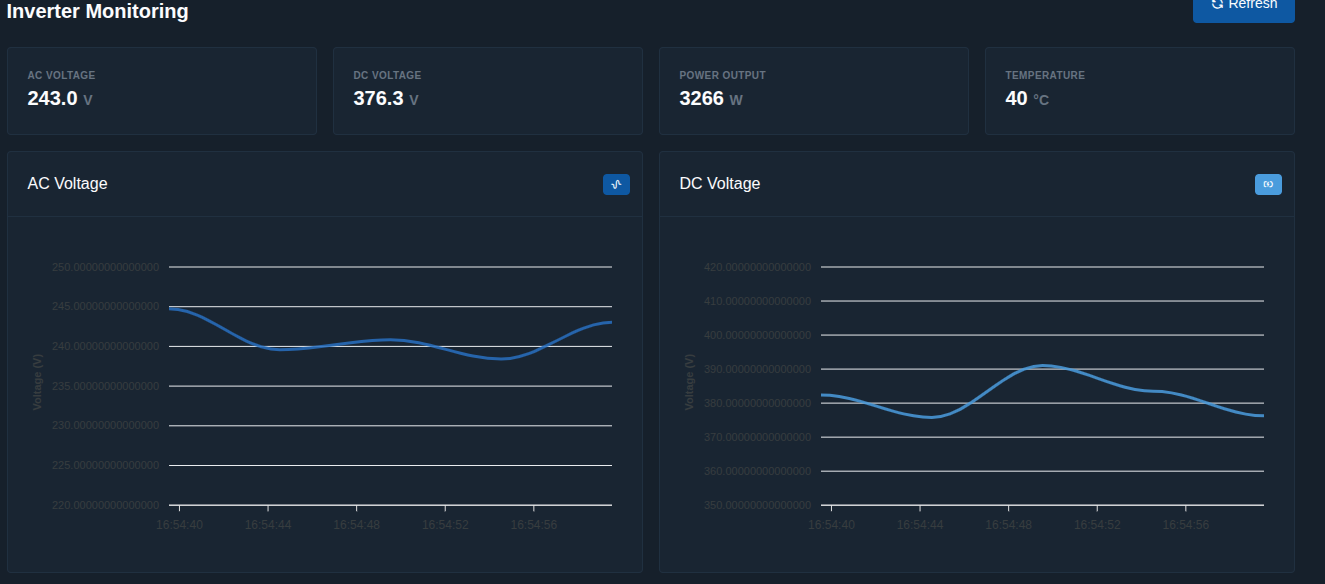
Real-time monitoring
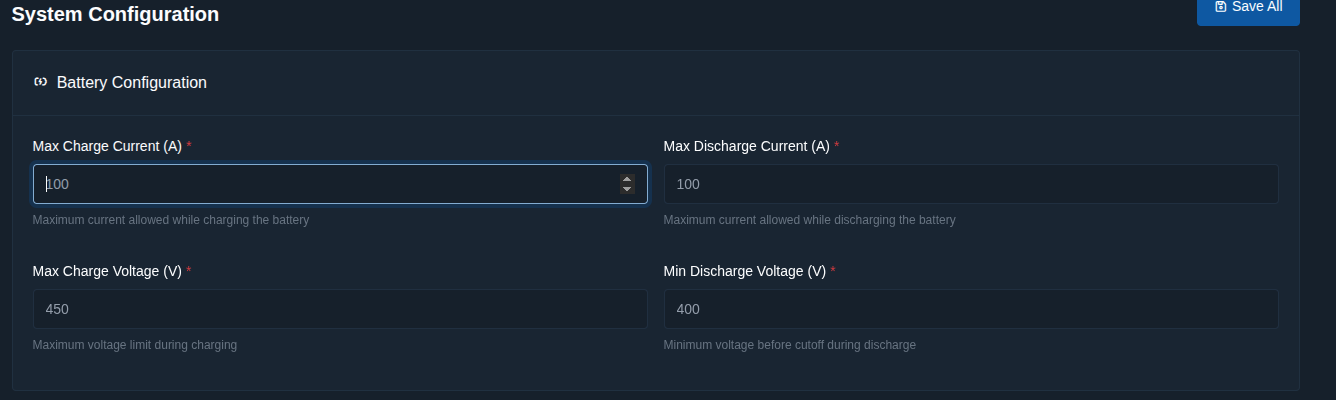
Device settings and configuration
5 - Embedded Dashboards
Single-File Embedded Dashboards
Zero-dependency, self-contained HTML dashboards designed to run on resource-constrained devices like the ESP32.
How It Works
A single HTML file containing all SVG, CSS, and JavaScript needed to control and monitor your embedded device. No external dependencies, no CDN, no internet connection required.
Example Features:
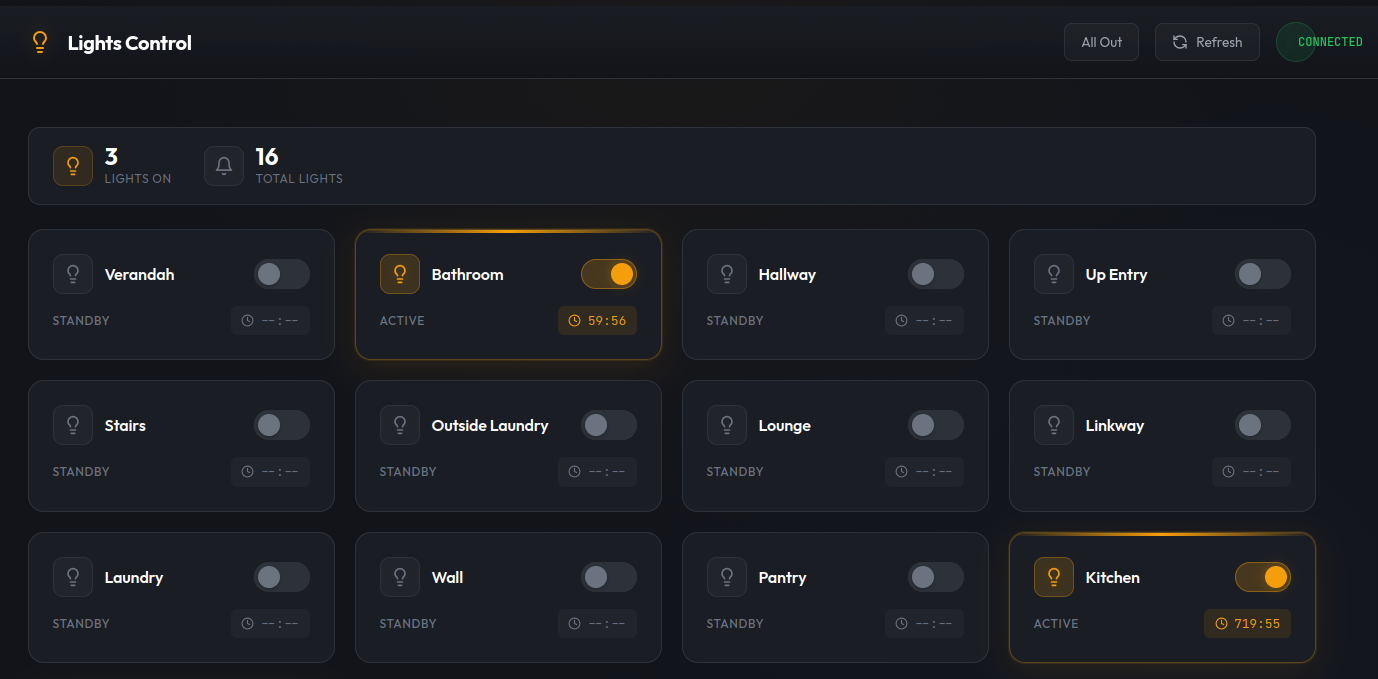
Light controller with auto-discovery
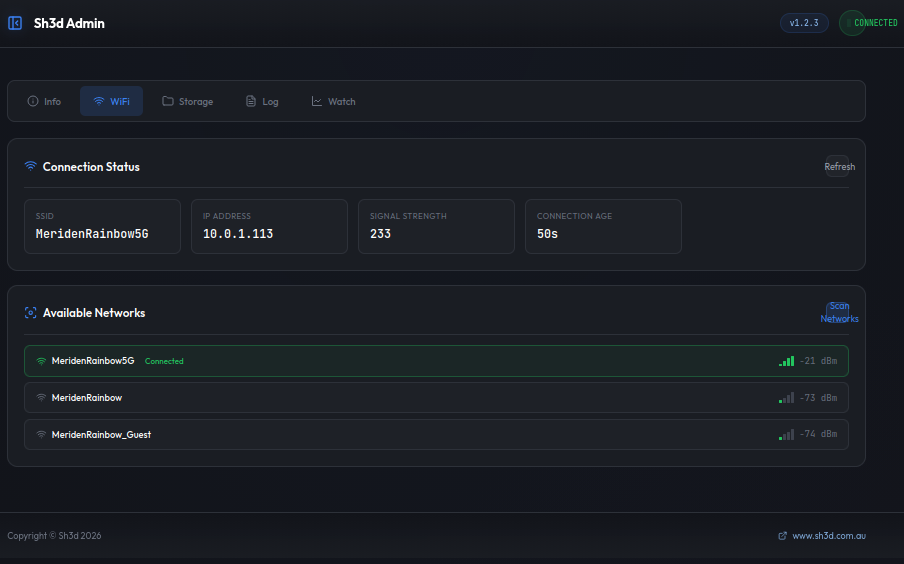
WiFi search and configuration
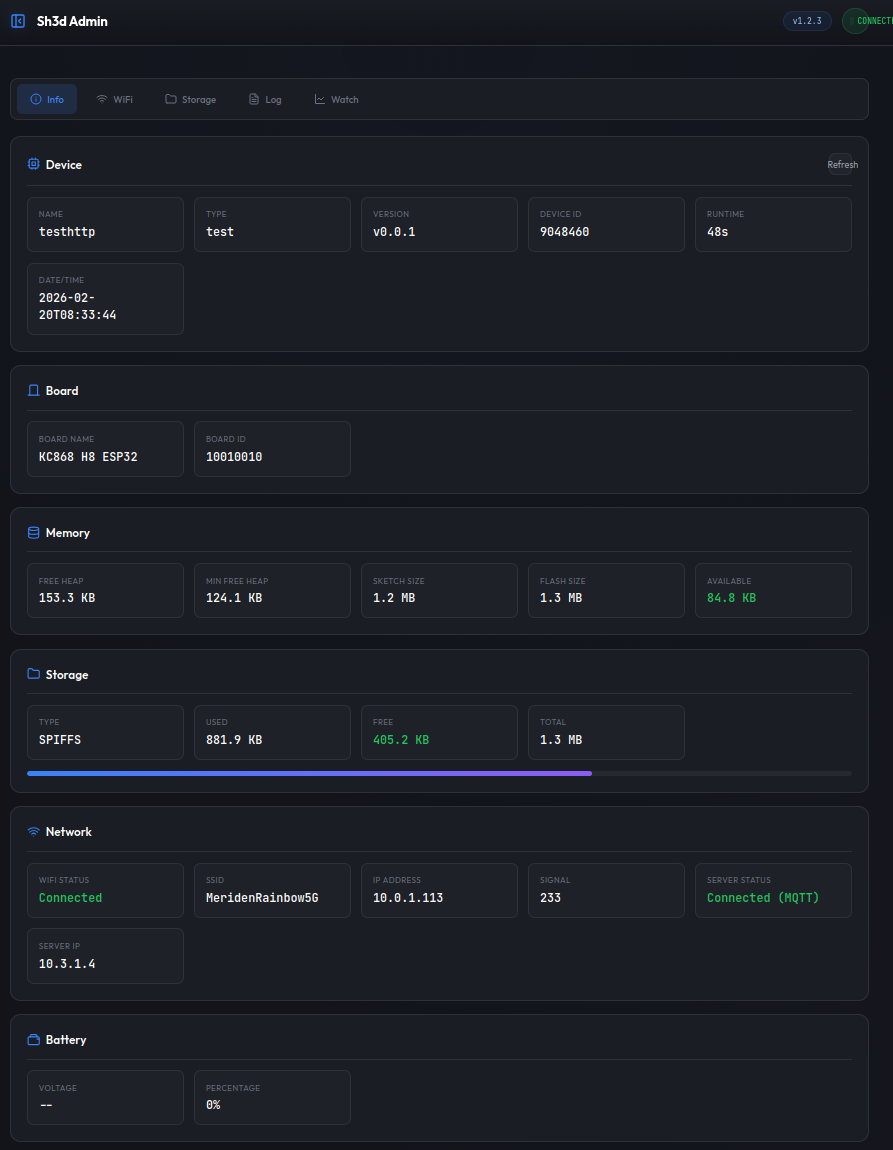
Full device status and memory monitoring
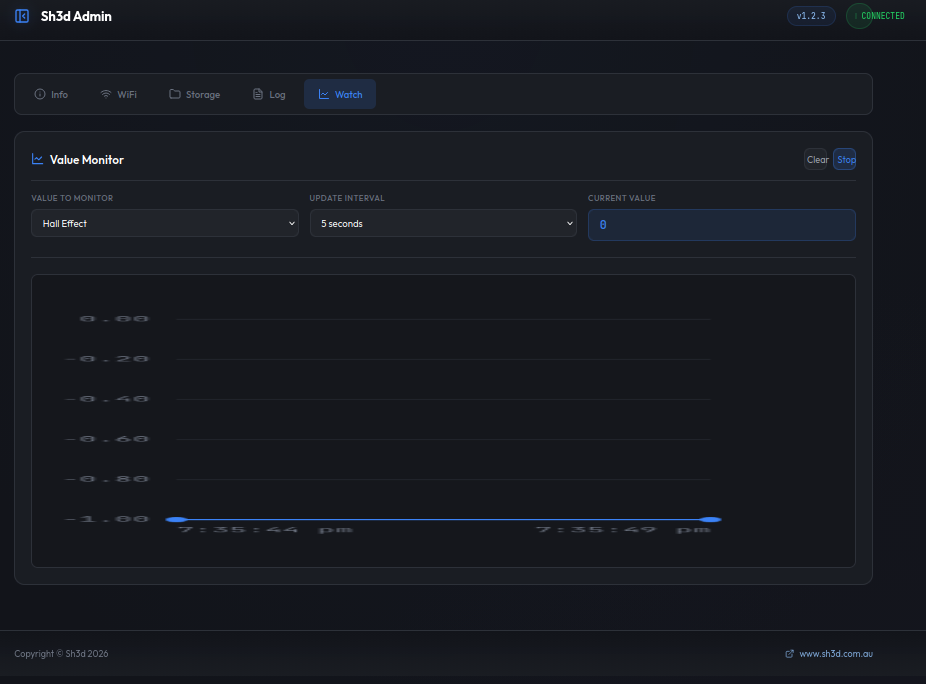
Multiple chart types for data visualisation
Also Built In:
File management interface
JSON API integration
Auto-discover configurable settings
Responsive design for any screen size
Screenshots
Light controller — auto-discovery checkboxes and status
Full device status including free memory
WiFi search and configuration
Multiple chart types available
6 - WII
Waves In Ice
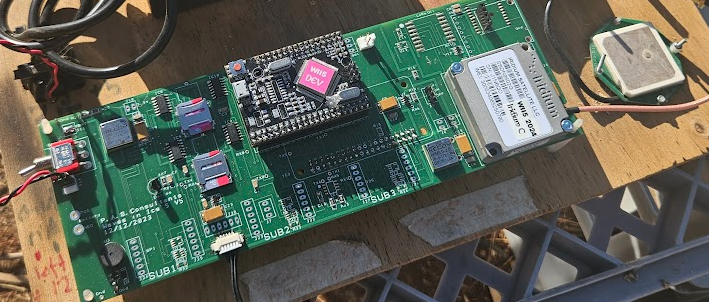
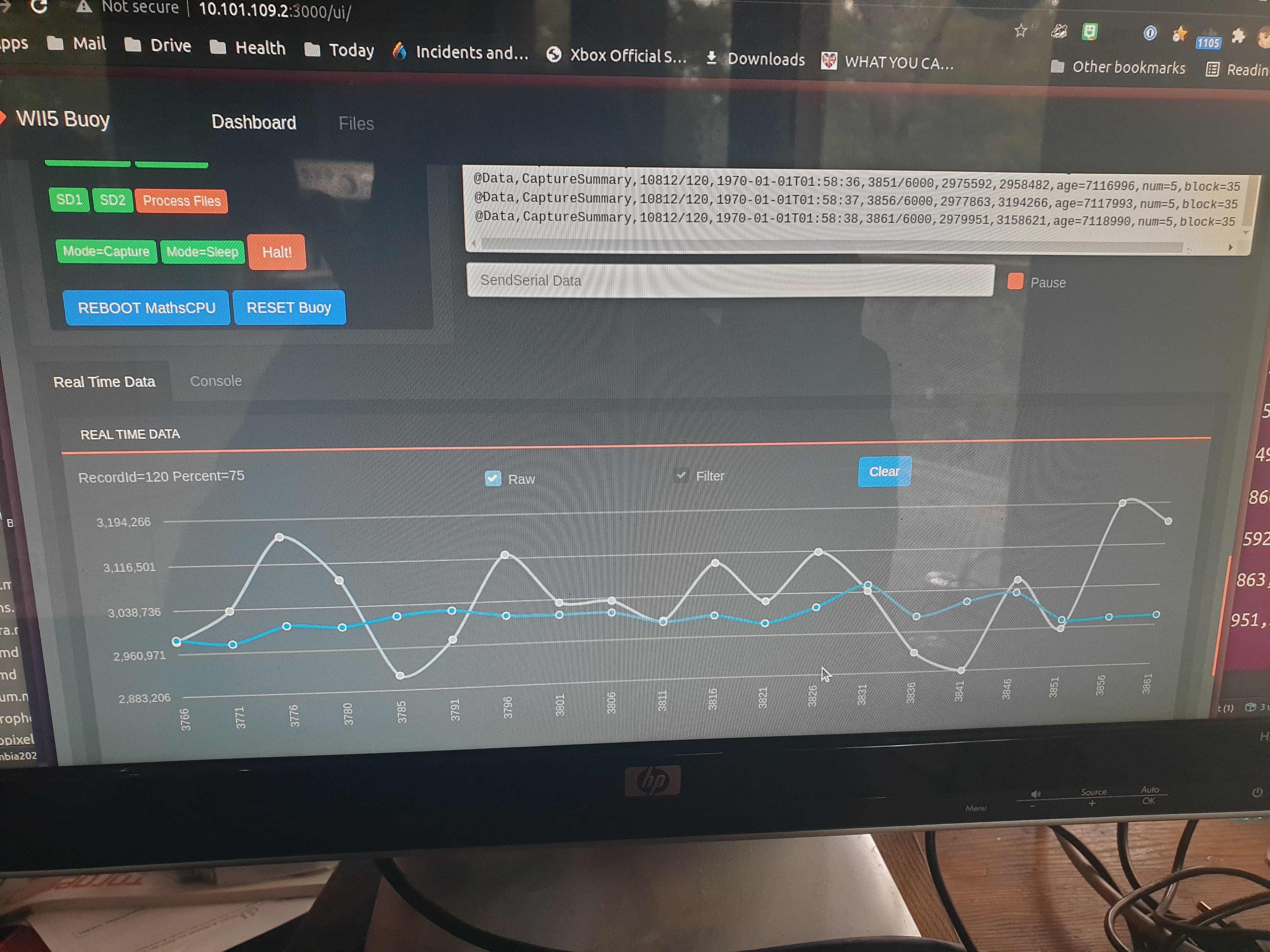
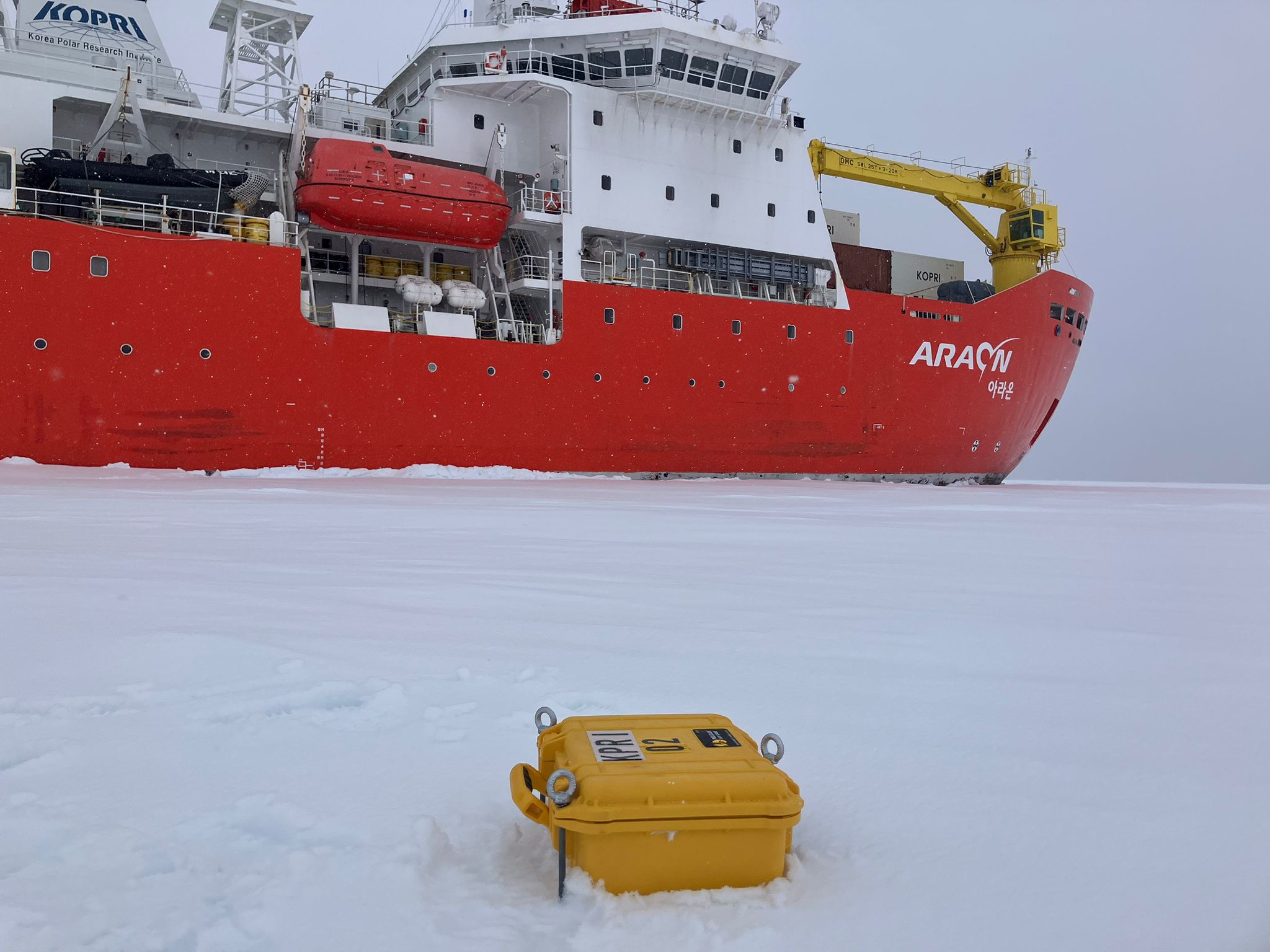
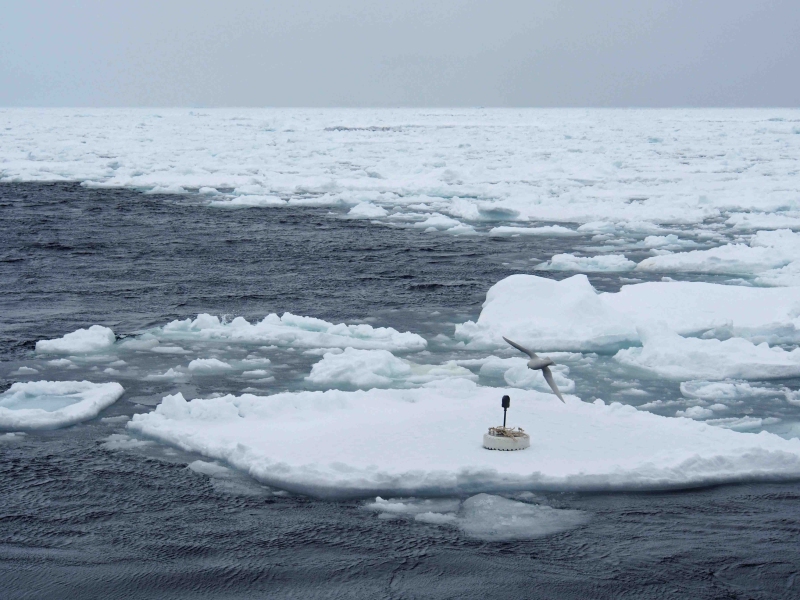
Custom wave monitoring systems designed for Antarctic sea ice — deployed internationally and published in Nature.
Research Background
Research by the National Institute of Water and Atmospheric Research (NIWA) in New Zealand has revealed that large ocean waves, particularly those over 3 metres, can travel hundreds of kilometres into Antarctic sea ice, acting as a major force in breaking up ice floes and accelerating retreat. This phenomenon explains how storm swells in the Southern Ocean significantly impact the stability and extent of polar ice.
Key Findings
Significant Impact Range: Large waves from the Southern Ocean can penetrate and break sea ice up to 350–500 km from the ice edge.
The “3-Metre” Threshold: Waves smaller than 3 metres generally have their energy dissipated quickly, but waves larger than 3 metres create a sustained, destructive oscillation in the ice pack.
Mechanism of Breakup: As waves pass through the Marginal Ice Zone (MIZ), they break the ice into smaller pieces. These smaller floes are then more easily deformed and broken further by winds and currents.
Impact on Ice Extent: Increased storminess and larger wave heights in the Southern Ocean are linked to increased breakup and retreat of sea ice, particularly near the Antarctic Peninsula.
Role in Climate Change: This research bridges the gap in understanding why some areas of sea ice grow while others recede, highlighting that wave-driven ice fracturing is a key, previously underestimated factor in climate models.
Innovative Methodology: Due to harsh conditions, earlier studies were limited. NIWA scientists used specialised, robust, autonomous equipment to measure the effects of these waves directly from the ice, including during and immediately after large storm events.
This research, largely published in Nature in 2014, fundamentally changed the understanding of how ocean dynamics affect the longevity of sea ice.