Waves In Ice
Waves In Ice
Wave measurement buoys that freeze into Antarctic sea ice and report over Iridium satellite for months. I have built and maintained the firmware since 2012, and the data has been published in Nature.
Visit the WII5 Site Visit the WII6 Site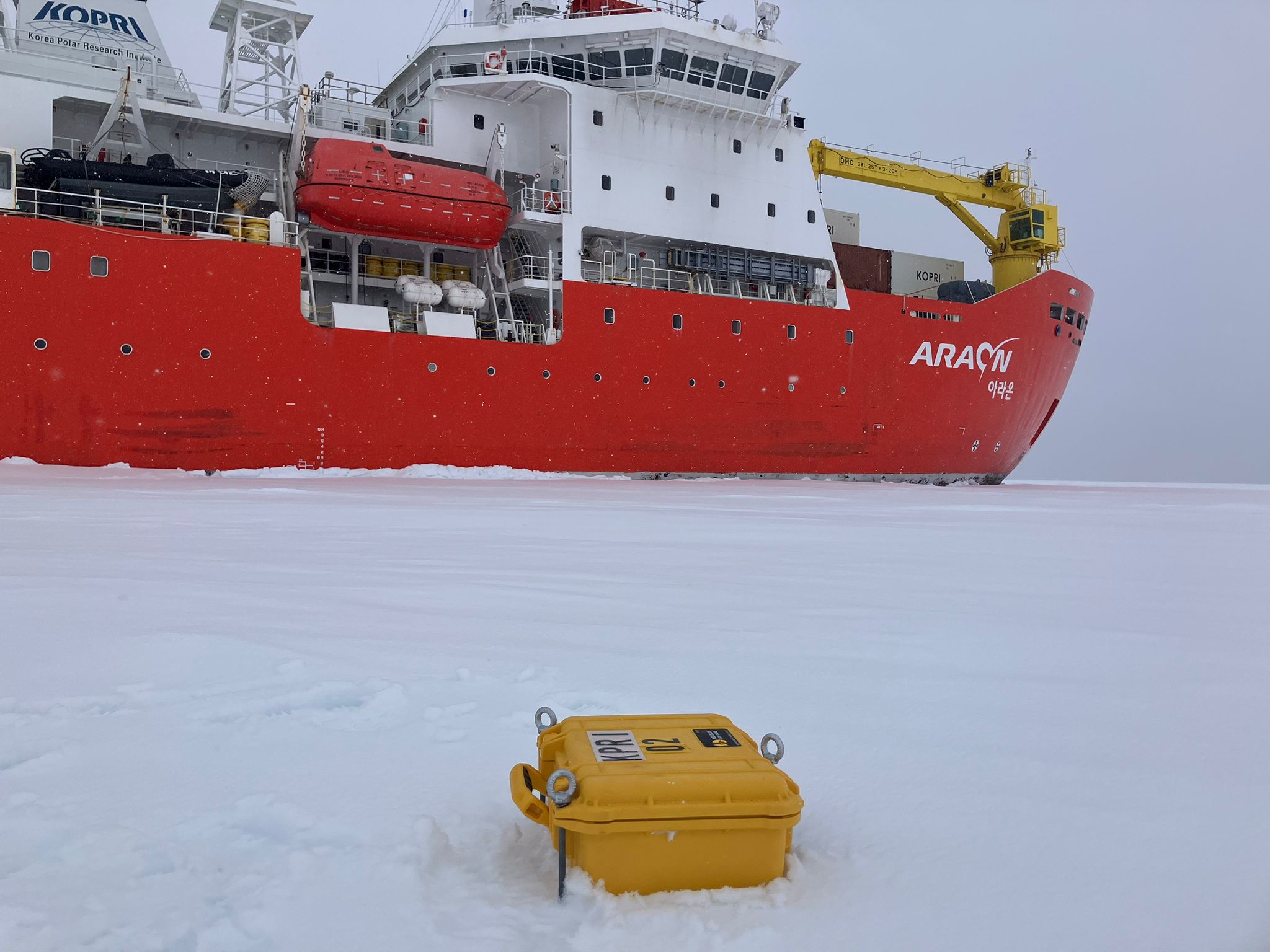
A buoy built for KOPRI (Korea Polar Research Institute) on Antarctic sea ice beside the icebreaker Araon, 2026.
The problem
Researchers at the National Institute of Water and Atmospheric Research (NIWA) in New Zealand wanted to measure ocean waves from the sea ice itself, hundreds of kilometres inside the Antarctic pack, during and after large storms. Earlier studies had been limited by the conditions.
A buoy left on an ice floe is not visited again. It runs on the battery it was deployed with, through the cold, and its only link home is an Iridium satellite modem.
What I built
- Firmware for each generation of the buoy, running on low-power microcontrollers and maintained since the first deployment in 2012.
- Wave processing on the buoy. The firmware turns accelerations from the motion sensor into wave spectra and statistics on an 8-bit AVR, because the raw record is too large to send.
- Iridium communications. About 70 Iridium 9602 and 9603 modems have gone into these buoys.
- Dashboards for watching deployed buoys, and an embedded test suite for the boards.
- WII6, the next generation, now in bench testing. It has my own four-layer board, Zephyr RTOS on an STM32U5, firmware updates through MCUboot, and Iridium Certus messaging through the RockBLOCK 9704.
The constraints
| Constraint | What it meant |
|---|---|
| Message size | An Iridium short burst message carries 340 bytes, so a whole wave record is reduced to statistics on board before anything is sent. |
| Power | A fixed battery budget has to last for months in low temperatures. |
| Processor | The wave maths runs on an 8-bit microcontroller. |
| Access | Nobody can reset or reflash a buoy once it is on the ice, so it has a watchdog and has to recover on its own. |
| Environment | The enclosure and electronics are frozen into moving pack ice. |
The result
- Buoys have been deployed since 2012 with NIWA, the University of Melbourne, NYU and research groups in Japan, and with KOPRI in 2026.
- The data was the basis of a 2014 paper in Nature on storm-induced sea-ice breakup, and of more than a decade of peer-reviewed publications since.
- The WII5 generation is open source under Apache 2.0: firmware, schematics, PCB designs, the wave-statistics maths and deployment logs back to 2012. There is a field note on why.
- The RockBLOCK 9704 Zephyr module written for WII6 is also open source. With messages of about 100 kB, the 2 Hz motion record can be sent when a scientist asks for it.
If you have something to measure a long way from power and coverage, send me a note about it. The usual first step is a design review or feasibility study.
What the science found
- Range: large waves from the Southern Ocean can break sea ice 350 to 500 km from the ice edge.
- The 3-metre threshold: waves under 3 metres lose their energy quickly, while waves over 3 metres keep the ice pack flexing far from the edge.
- Ice extent: more storms and larger waves in the Southern Ocean are linked to more breakup and retreat of sea ice, particularly near the Antarctic Peninsula.
- Climate models: wave-driven fracturing helps explain why some areas of sea ice grow while others recede, and had been underestimated in climate models.
Links
- WII5, the open source wave buoy site, with the firmware source
- WII6, the next generation
- NIWA Scientists Make Waves About Sea Ice
Hardware
The board has been redesigned for each generation since 2012.
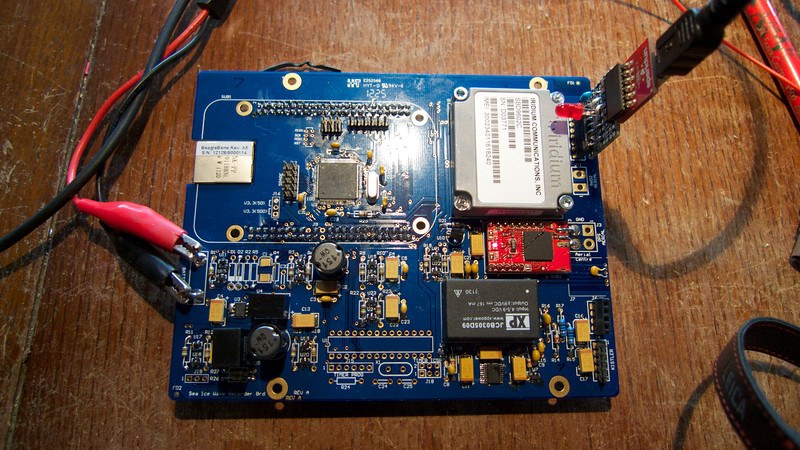
The WII1 board from 2012, with the Iridium modem at the top right
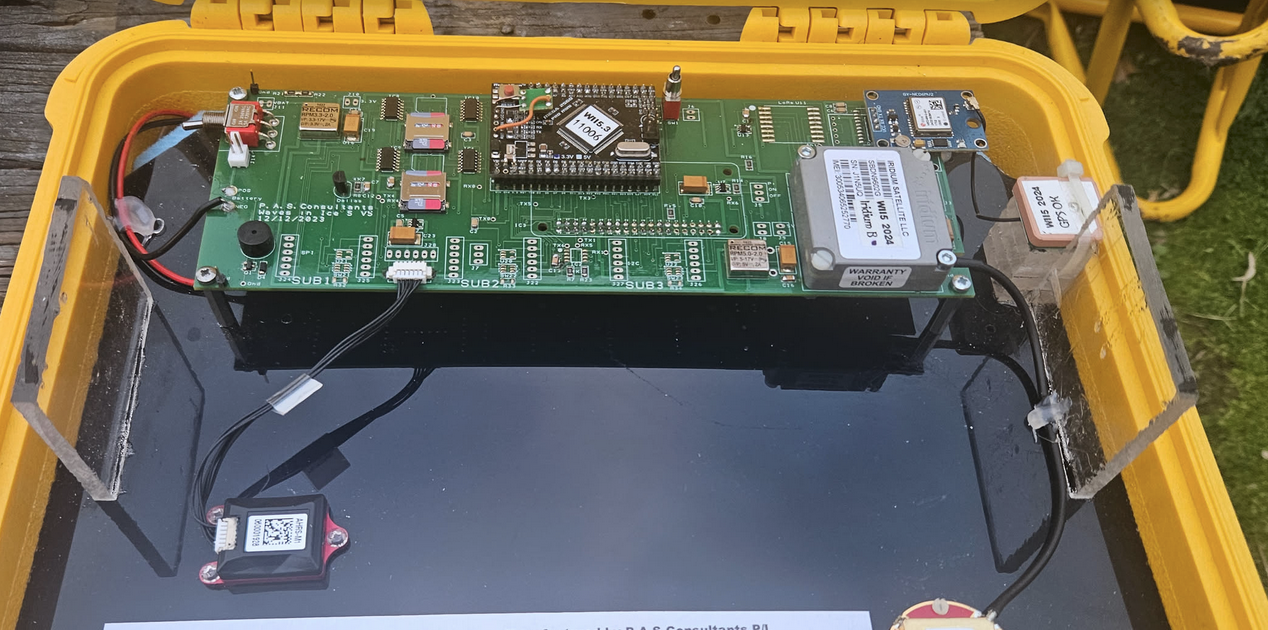
A WII5 buoy with the case open: the board, with the Iridium 9603 modem on the right
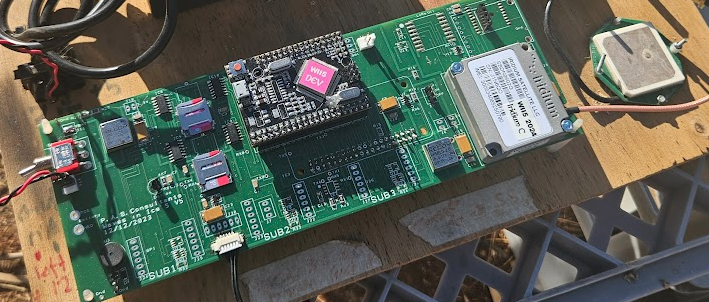
A WII5 board in testing
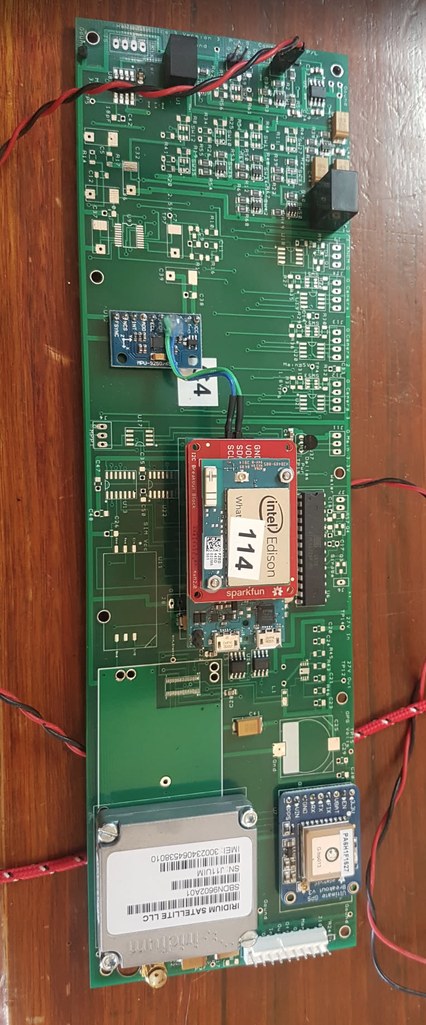
A WII3 board: Intel Edison in the middle, Iridium 9602 modem and GPS at the bottom
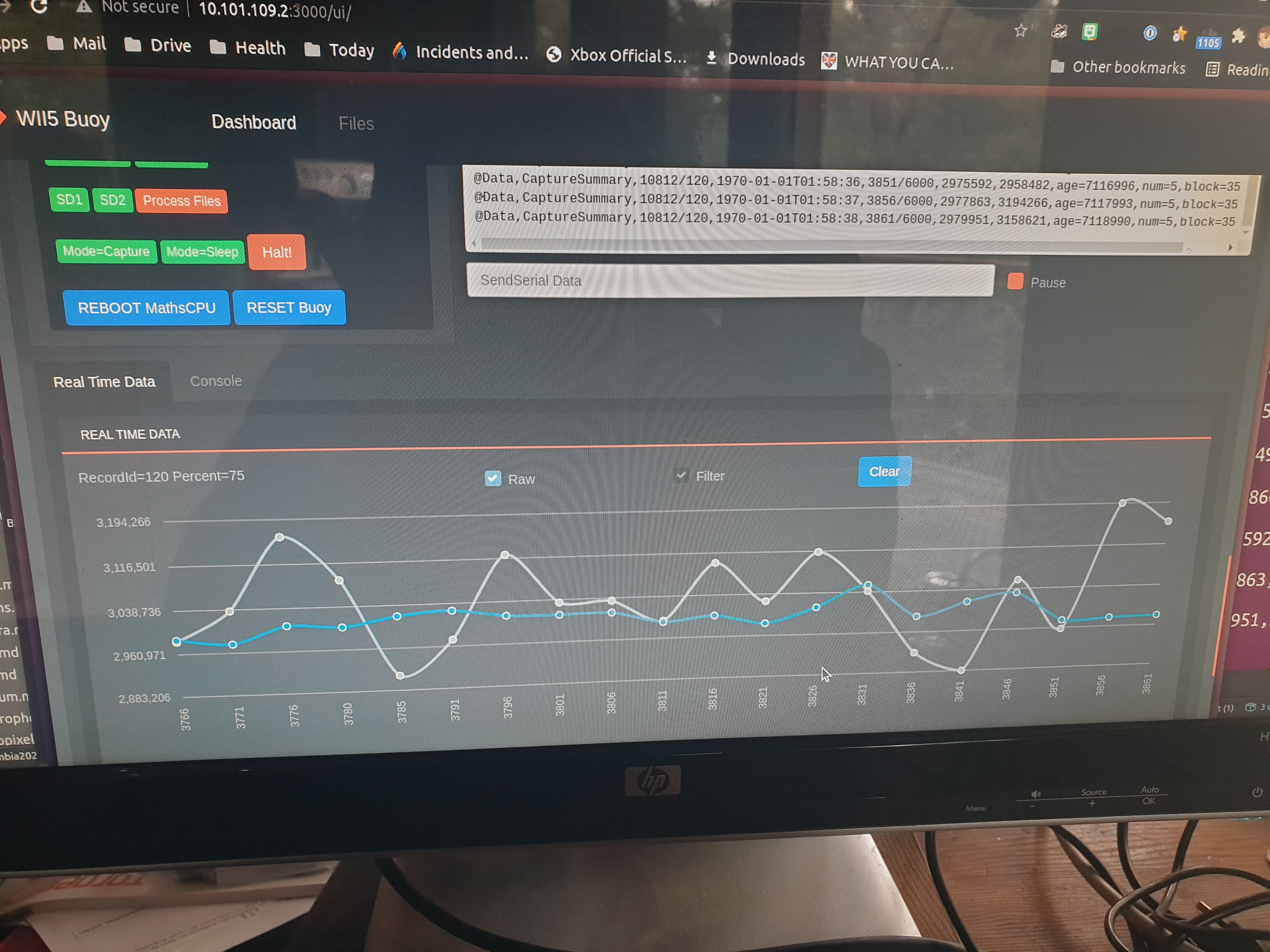
Embedded full test suite
Deployment
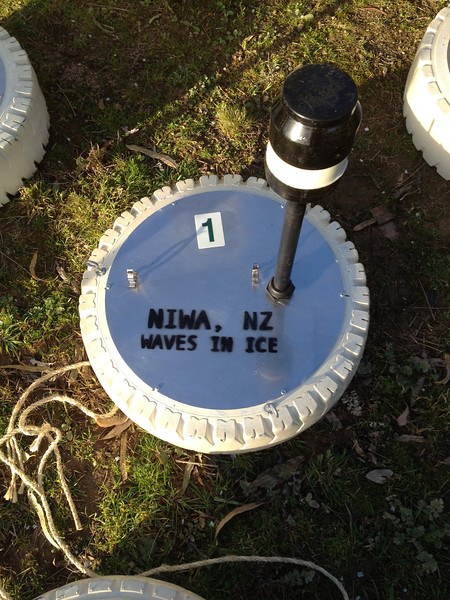
Buoy 1 of the 2012 NIWA array, before it went to Antarctica.
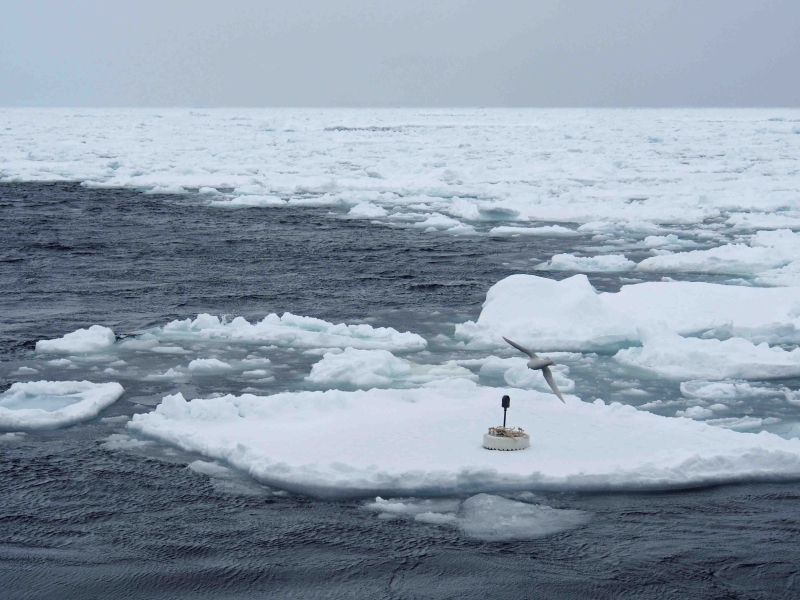
A wave measurement buoy deployed on Antarctic sea ice.
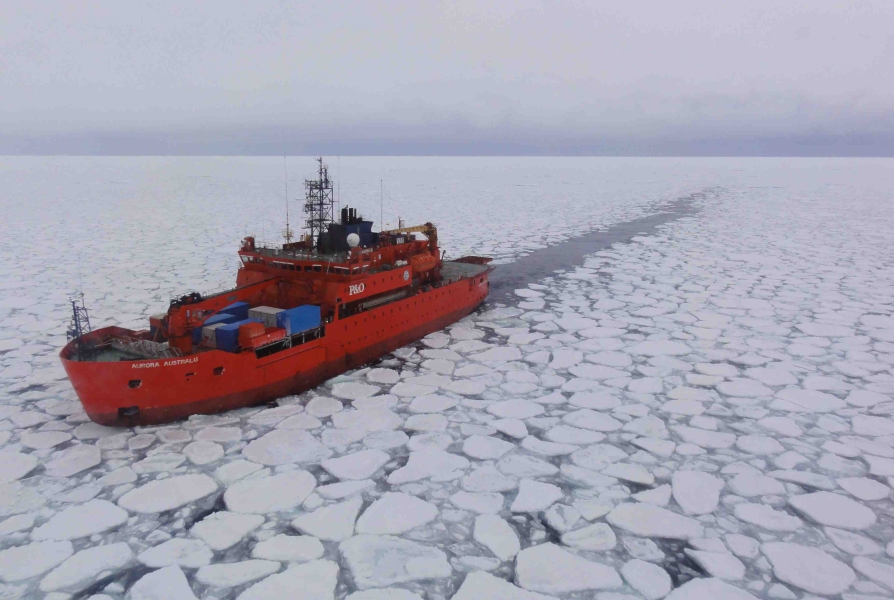
The Aurora Australis navigating through Antarctic sea ice during buoy deployment.
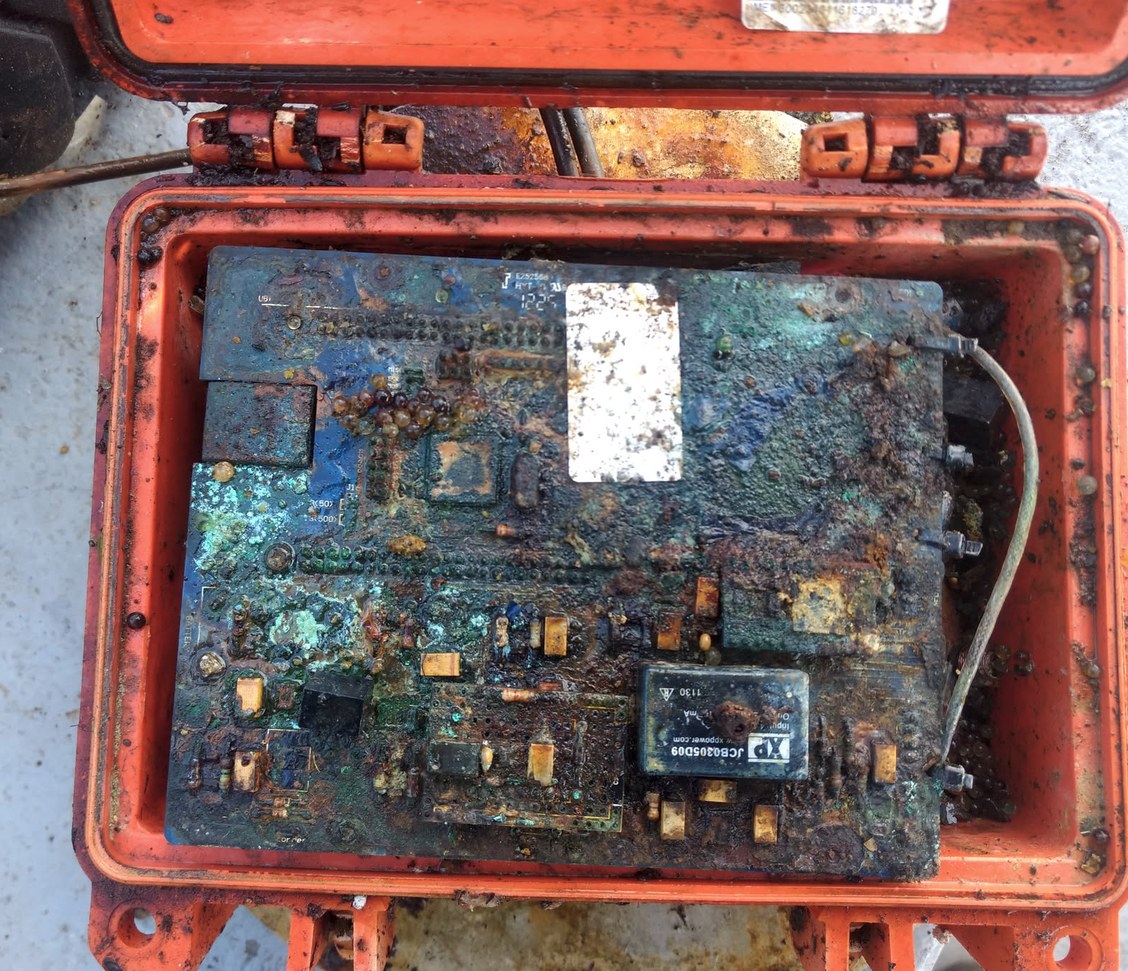
The board from a buoy that washed ashore and was recovered in August 2018.